Outdoor Nature Activities for Children: A Complete Guide
Children are born with an innate curiosity about the natural world — a curiosity that modern life often systematically dampens. The average child today spends less than 30 minutes per day in unstructured outdoor play, compared to several hours just a generation ago. This shift matters because nature is not just a pleasant backdrop for childhood — it is a developmental necessity.
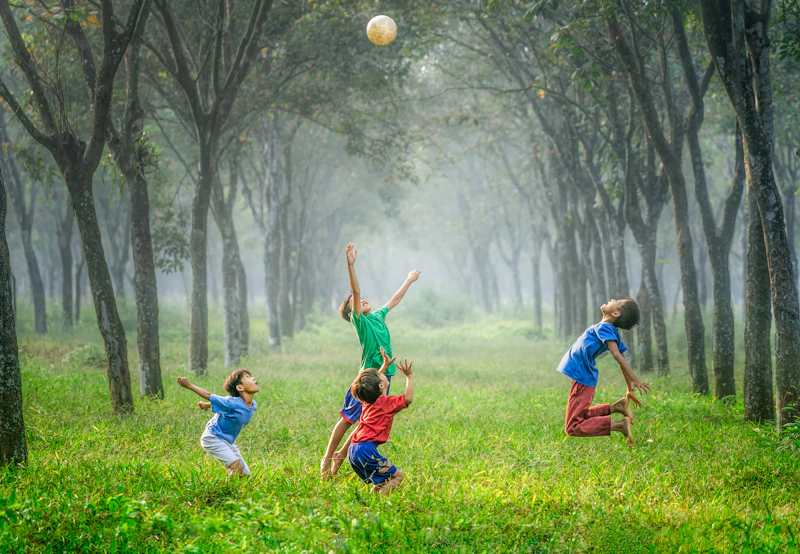
Outdoor nature activities support every domain of child development: physical health, cognitive growth, emotional regulation, social skills, and sensory integration. And the good news is that meaningful nature engagement doesn't require wilderness expeditions or elaborate equipment. It requires intention, a little knowledge, and a willingness to let children explore at their own pace.
Why Nature Matters: The Evidence
The research on nature's impact on children is extensive and consistent. According to the American Academy of Pediatrics, regular outdoor play is associated with:
- Improved motor development and coordination
- Better vision outcomes (reduced risk of myopia)
- Enhanced executive function and attention
- Reduced symptoms of ADHD
- Lower stress and improved emotional regulation
- Increased creativity and problem-solving skills
- Better sleep quality
The CDC recommends that children ages 3–5 be physically active throughout the day, and that children ages 6–17 get at least 60 minutes of moderate-to-vigorous physical activity daily. Outdoor play is one of the most effective ways to meet these guidelines — and it provides benefits that indoor exercise alone cannot replicate.
Beyond the physical benefits, nature provides a unique sensory environment that is inherently regulating for children's nervous systems. The natural world operates at a different pace and scale than the built environment — a pace that matches children's developmental needs more closely than the rapid-fire stimulation of screens and indoor toys.
Nature Activities by Age and Stage
Effective nature activities match a child's developmental capabilities. What engages a toddler will bore a school-age child, and what challenges a school-age child will overwhelm a preschooler. The following activities are organized by developmental stage, with clear guidance on what each age group is ready for and why.
Infants (0–12 Months)
For infants, nature is primarily a sensory experience. They are not yet exploring independently, but they are absorbing the world through their senses.
- Nature walks in a carrier or stroller: The movement, fresh air, and changing visual input are stimulating without being overwhelming. Narrate what you see: "Look at the green leaves," "Hear the birds singing."
- Tummy time on a blanket outdoors: The different textures (grass, dirt, sand) provide novel sensory input. Always supervise closely and protect from sun exposure.
- Exploring safe natural objects: Offer a smooth stone, a large leaf, or a pinecone to touch and mouth (with supervision). Avoid small objects that could be choking hazards.
- Water play: A shallow basin of water with a few leaves or flowers floating in it provides visual and tactile stimulation.
The goal for infants is exposure, not structured activity. Even 15–20 minutes outdoors daily builds familiarity with the natural world and establishes outdoor time as a normal part of daily life.
Toddlers (1–3 Years)
Toddlers are mobile, curious, and driven to explore. Their nature activities should be simple, sensory-rich, and focused on process rather than product.
- Nature scavenger hunts: "Find something green," "Find something smooth," "Find something that makes a sound." Keep it simple and concrete.
- Mud kitchen: A few old pots, pans, and spoons plus dirt and water create endless imaginative play. This is messy — embrace it.
- Leaf and flower collecting: Toddlers love gathering. Provide a small basket or bag and let them collect fallen leaves, pinecones, or safe flowers.
- Puddle jumping: With appropriate rain gear, puddles are irresistible. This builds gross motor skills and provides proprioceptive input that is calming for many toddlers.
- Rock stacking: Simple balancing activities develop fine motor control and spatial reasoning.
Toddlers need close supervision outdoors, but they also need freedom to explore within safe boundaries. Resist the urge to direct their play — follow their curiosity instead. Our guide to building toddler independence covers how to balance safety with exploration.
Preschoolers (3–5 Years)
Preschoolers have the language, cognitive skills, and physical coordination for more complex nature activities. They are beginning to understand basic ecological concepts and can engage in simple stewardship.
- Nature art: Create mandalas with leaves, flowers, and stones; make leaf rubbings; paint with mud or crushed berries.
- Bug hotels: Build simple habitats for insects using sticks, leaves, and hollow stems. This teaches respect for living creatures.
- Planting and gardening: Even a small container garden teaches responsibility and the plant life cycle. Fast-growing plants like beans or sunflowers maintain interest.
- Nature journaling: Simple drawings or dictated observations about what they see, hear, and smell.
- Building forts or fairy houses: Using fallen branches, leaves, and other natural materials to create structures.
- Bird watching: With a simple guidebook or app, preschoolers can learn to identify common backyard birds.
Preschoolers benefit from a mix of unstructured exploration and simple guided activities. Their attention spans are still short, so keep activities flexible and follow their interests. The developmental benefits of outdoor play are particularly pronounced during the preschool years.
School-Age Children (6–12 Years)
School-age children are ready for more complex projects, longer expeditions, and deeper ecological understanding. They can handle tools safely and understand cause-and-effect relationships in nature.
- Geocaching or orienteering: Combines technology with outdoor exploration, teaching navigation skills.
- Nature photography: With a simple camera or smartphone, children can document their observations and create their own field guides.
- Stream exploration: Looking for aquatic insects, testing water quality, observing erosion patterns.
- Building more complex structures: Lean-tos, simple bridges, or rope swings using natural materials.
- Citizen science projects: Contributing to real scientific research through programs like eBird, iNaturalist, or local wildlife monitoring.
- Camping skills: Fire building (with supervision), knot tying, basic shelter construction.
School-age children thrive on challenge and mastery. Nature provides endless opportunities for both, while also offering the unstructured time that is increasingly scarce in their scheduled lives.
Overcoming Common Barriers to Outdoor Play
Most parents understand that outdoor time is valuable. The challenge is often practical: time constraints, weather concerns, safety worries, and children's own resistance to leaving screens. Here are evidence-based strategies for overcoming each barrier:
"We Don't Have Time"
Nature time doesn't need to be an all-day expedition. Even 20–30 minutes daily provides benefits. Integrate nature into existing routines:
- Walk or bike to school or errands when possible
- Eat meals outdoors when weather permits
- Use outdoor time as transition between activities ("Let's run around the yard for 10 minutes before we start homework")
- Combine outdoor time with other responsibilities (gardening, pet care)
"The Weather Is Bad"
There is no bad weather, only inappropriate clothing. With proper gear, children can enjoy outdoor time in most conditions:
- Rain: Raincoats, boots, and umbrellas make puddle jumping possible
- Cold: Layering, waterproof outer layers, and movement keep children warm
- Heat: Morning or evening outings, shade, hydration, and water play
Extreme weather (dangerous heat, severe cold, thunderstorms) is an exception — but most "bad weather" is simply discomfort that appropriate clothing solves.
"I'm Worried About Safety"
Reasonable safety precautions are essential, but excessive fear can deprive children of developmental opportunities:
- Sun safety: Sunscreen, hats, protective clothing, and avoiding peak sun hours
- Insect protection: Appropriate repellents, checking for ticks after outdoor time
- Plant safety: Teaching children to identify and avoid poison ivy, oak, and sumac
- Water safety: Constant supervision near water, life jackets when appropriate
- Stranger safety: Age-appropriate conversations about staying within designated areas
The goal is managed risk, not risk elimination. Children need opportunities to assess and navigate minor risks to develop judgment and resilience.
"My Child Prefers Screens"
This is perhaps the most common barrier in contemporary parenting. Strategies that work:
- Make outdoor time non-negotiable but enjoyable: "We're going outside for 30 minutes. What would you like to do?" gives agency within the boundary.
- Combine technology with nature: Use apps for bird identification, geocaching, or nature photography.
- Start small and build gradually: Begin with 10–15 minutes and increase as resistance decreases.
- Model enjoyment: Children notice when parents genuinely enjoy being outdoors versus treating it as a chore.
- Create outdoor spaces that invite play: A simple sandbox, swing, or garden plot can draw children outside naturally.
The Role of Risk in Nature Play
One of the most valuable — and most anxiety-provoking — aspects of nature play is the element of managed risk. Climbing trees, balancing on logs, jumping from rock to rock, and exploring without constant adult intervention all involve some degree of physical risk. This risk is not a bug of nature play — it is a feature.
Research on risky play consistently shows that children who engage in age-appropriate risky play develop better risk assessment skills, greater physical competence, increased confidence, and reduced anxiety. They learn their own limits through experience rather than through being told what they can't do.
This doesn't mean abandoning supervision or allowing truly dangerous activities. It means allowing children to navigate challenges that are slightly beyond their current comfort zone, with support available if needed. A child who climbs a low tree branch learns about balance, grip strength, and how to judge what they can handle — lessons that build both physical and psychological resilience.
Creating a Nature-Rich Home Environment
You don't need to live near wilderness to provide meaningful nature experiences. Small, intentional changes to your home environment can significantly increase children's nature engagement:
Outdoor Spaces
- Plant a sensory garden: Include plants with different textures, scents, and colors. Herbs like mint, lavender, and rosemary are easy to grow and engage multiple senses.
- Create habitat: A bird feeder, bird bath, or insect hotel brings wildlife within observation range.
- Leave some areas wild: A corner of the yard left unmowed creates habitat for insects and small animals and provides exploration opportunities.
- Add water: Even a small fountain or shallow basin attracts birds and insects and provides sensory play.
Indoor Connections
- Nature tables: A designated space where children can display their nature finds — rocks, shells, pinecones, feathers.
- Nature books and field guides: Age-appropriate resources that help children identify what they find.
- Windowsill gardens: Herbs, succulents, or fast-growing plants that children can care for and observe.
- Nature art supplies: Keep materials for leaf rubbings, rock painting, and nature collages easily accessible.
Nature Activities for Different Seasons
Each season offers unique opportunities for nature engagement. Embracing seasonal changes teaches children about natural cycles and provides variety throughout the year.
Spring
- Planting seeds and watching them grow
- Observing budding trees and emerging flowers
- Listening for returning migratory birds
- Searching for frog eggs or tadpoles in ponds
- Rainy day explorations with proper gear
Summer
- Nighttime explorations for fireflies or stargazing
- Water play in sprinklers, pools, or natural bodies of water
- Berry picking (with proper identification)
- Shadow tracing and sundial making
- Butterfly and dragonfly watching
Fall
- Leaf collecting and identification
- Pumpkin and apple picking
- Observing migration patterns of birds
- Collecting seeds and learning about dispersal
- Making leaf piles and jumping in them
Winter
- Tracking animal footprints in snow
- Ice experiments (freezing natural objects in ice, observing melting patterns)
- Bird feeding and observation
- Evergreen identification and winter tree study
- Building snow structures
When Children Resist Nature Time
Some children are naturally drawn to outdoor play. Others need more encouragement. For resistant children:
- Start with their interests: A child who loves dinosaurs might enjoy fossil hunting (looking for interesting rocks). A child who loves art might enjoy nature photography or leaf printing.
- Bring a friend: Social motivation is powerful. Invite a peer along for nature adventures.
- Use technology as a bridge: Apps that identify plants, birds, or stars can make nature exploration feel more like a game.
- Keep it short and sweet: Better 15 positive minutes than an hour of struggle. Build duration gradually.
- Don't call it "nature time": Frame it as an adventure, exploration, or special mission.
The Long-Term Benefits: Beyond Childhood
The benefits of regular nature engagement extend far beyond childhood. Children who develop a connection to nature are more likely to:
- Become environmentally conscious adults
- Maintain active lifestyles
- Experience lower rates of anxiety and depression
- Develop stronger observational and problem-solving skills
- Maintain curiosity and lifelong learning habits
Perhaps most importantly, children who feel connected to nature develop what environmental psychologists call "ecological identity" — a sense of themselves as part of the natural world rather than separate from it. This identity supports both personal wellbeing and environmental stewardship.
"We do not inherit the earth from our ancestors; we borrow it from our children." — Native American Proverb
Getting Started: A Simple Action Plan
- Commit to 20 minutes outdoors daily — rain or shine, with appropriate clothing.
- Create a "go bag" with essentials: sunscreen, bug spray, water bottle, small first aid kit, magnifying glass, collection bag.
- Identify three local nature spots — a park, a trail, even a tree-lined street — and rotate between them.
- Let your child lead — follow their curiosity rather than directing their exploration.
- Document discoveries with photos, drawings, or a simple nature journal.
- Talk about what you notice — model curiosity and observation.
- Be consistent, not perfect — some days will be better than others. What matters is the habit.
Nature is not an extracurricular activity to be scheduled between other commitments. It is the context in which human development evolved, and it remains the environment in which children thrive most fully. By making outdoor nature activities a regular part of family life, you are giving your child gifts that cannot be purchased or programmed — space, freedom, wonder, and a foundation of health that will support them for a lifetime.
Want to stay updated on our journey?
Join our mailing list